Tapping into your courage is about saying, “I can”. It is about being willing to make bolder choices to do whatever you are afraid of doing, physically or emotionally to triumph over fear. Courage can be asking for a raise, giving a stranger a compliment, or establishing personal boundaries. You may need courage when confronting uncertainties about something unfamiliar or when you engage in complex, unfamiliar, and challenging concepts or endeavors. Courage can be an intelligent gamble, calculated through careful deliberation and preparation.
Brene Brown, popular author and research professor in social work, reminds us that the root word for courage is ‘cor’ –the Latin word for heart. For her, courage means ‘to speak one’s mind by telling one’s heart.’
Another researcher, Jonathan Lear, says, “Courage is the capacity for living well with the risks that inevitably attend human existence.”
Mary Anne Radmacher, the bestselling author of Live Boldly and Courage Doesn't Always Roar says: "Sometimes courage is the quiet voice at the end of the day saying I will try again tomorrow."
Winston Churchill said, “Success is not final, failure is not fatal; it is the courage to continue that counts.”
Many people yield to their fears. People are afraid of being alone, so they remain in miserable relationships. People fear conflict or what others will think, so they refrain from asking questions, voicing opinions, or suggesting great ideas. People fear letting their team down or tarnishing their reputation. They fear being labeled, being wrong or looking dumb? People fear being underappreciated, or someone else taking credit for their ideas. People fear having brave conversations when they witness injustice or someone hurting. We all have fears.
Fear can limit or stop you from experiencing many things that are extremely good for your well-being. Shying away from your fear does not make it go away. Actually, the fear becomes bigger in your mind. You can choose to eyeball your fear and act in spite of fear. Be a hero to yourself. Identify your fears. Say them aloud, write them down. Then take a step forward, even if you feel a bit unsteady.
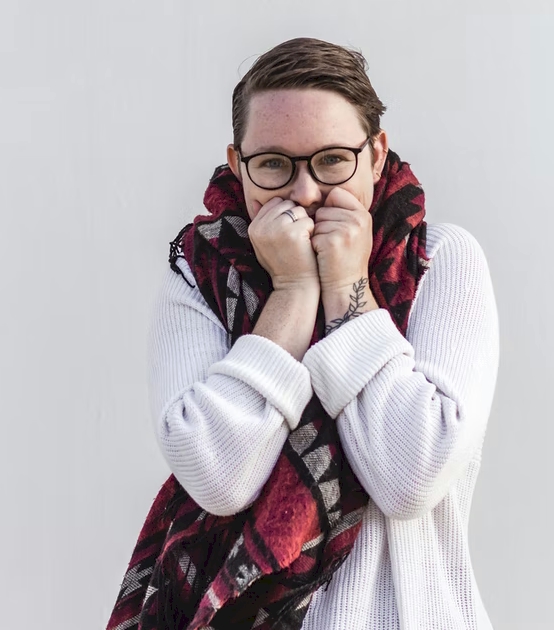
You have no fears, you say? Do you recall ever using the words “impossible” or “hopeless” or “awkward” to yourself. The situations within which you said such things may not have been alarming. Still they were cause for thoughts of uneasiness or trepidation.
Let’s look at four instances of fear that many people do not consider as such.
Fear of appearing selfish. How many times have you decided to sacrifice your needs because you did not want to appear selfish, fearing how others might perceive you?
The second one is fear of being decisive. Have you ever waited so long trying to make a decision that the opportunity itself was lost? Research shows that many people opt for making no decision even if logic would dictate otherwise.
How about number three: “saying no”? Ask yourself, when was the last time you said “no” to people when you did not want to do something they asked of you. Was it fear of not being liked or of offending the other person? How often do you things you do not want to do?
The fourth is “fear of not being perfect. How many times in your life did you avoid participating in an activity because you might feel embarrassed, vulnerable, or look awkward? How often do you want to appear perfect? You can waste valuable time and energy and drive yourself crazy aiming for that kind of perfect.
Fear is normal. We fear losing things. We fear unpleasantness. To face these things, the majority of us have to learn and build courage as we go along. Previously quoted Mary Anne Radmacher, celebrates accomplishments and inspires courage in our everyday lives.
Your courage is revealed whenever you demonstate any of the following:
It takes courage to acknowledge your shortcomings and take personal responsibility for your decisions. People often play the victim card, making excuses, without even realizing they are because making excuses is part of the internal story people tell themselves. If you fail to assume responsibility and are quick to blame circumstances or other people when an outcome is not good, you are allowing external circumstances account for everything. Then how can you take credit for your successes! Mistakes are what you did, not who you are. Courage to take responsibility is evidence of your honesty and trustworthiness.
It takes courage to try new things, make mistakes, and keep going no matter what the outcome might be. Your very best lessons in life almost always come directly from your biggest blunders. So, instead of worrying about what might go wrong focus on the experience.
It takes a courageous spirit to speak up. Speaking up is absolutely critical to making a difference, or creating change and growth. Blowing the whistle on corruption – the CEO who seriously pushes to investment in environmentally harmful. Blowing the whistle on lies – just because someone says something is true, or because “everyone” is repeating it as fact, doesn’t actually make it true.
It takes courage to be vulnerable, to be willing to shed your protective layer and let people see the real you. The openness and honesty that comes from being vulnerable fosters trust. You simply cannot have trust without vulnerability.
It takes courage to admit when you are wrong. Getting back up when you have suffered a set back is one of the bravest things you can do.
You could waste a lot of time imagining that bad things might happen to you. You can waste a lot of time plotting for the remote possibility that you will succumb to the unknown.
To be courageous is to not worry about things that are our of your control or things that are unlikely to happen. To be courageous is to foucs on what you can control, which are your emotions and how you approach difficult situations that give you pause for fear, but are not truly disastrous.
A. Master your Emotions for Courage
Courage is a human activity that requires you to master your emotions.
In any overwhelming or anxious situation, we often react too quickly and let our emotions rule which results in a lack of clarity. This often generates negative emotions and beliefs. When you confront a challenge the key is to think rationally about what it is you are facing, what want to do and what is the right thing to do in the situation. To do that you have to get your emotions into check so that you can create perspective and tap into your strengths and capabilities.
Everyone in the world faces a challenge. So why not you? Many other people confront much worse situations. So what makes your situation so profoundly unsurmountable? Ask yourself:
What am I actually afraid of?
What am I afraid of losing?
Is it the right thing to be afraid of?
Should I be this afraid of it? Rationally, should I be less or more afraid?
What harm can this thing actually do to me or others?
What are the things that could happen as a result of my actions and/or inactions?
What is the worst that could happen as a result of my actions and/or inactions?
What are the risks to me and to others?
Curious questions 1-8 fuel your self-awareness and gives you the strength to evaluate your emotional response and then act rationally and rightly. Once you expose the distortion or limiting belief, you are able to shift your resistance and release your courage to find wisdom or opportunity too.
Remind yourself of your capabilities and uniqueness as an individual. Are those still present?
If they are, there’s less to fear.
Think back to a situation when you felt decisive, capable, bold, feisty or determined. Remember the moment as clearly as you can. Where were you? What was the atmosphere? How clear-minded were you? How strong did you feel?
The more vivid the image you recall, the more the emotions will come back as well. Draw strength and resilience Remember what it felt like, and draw strength, self-assurance, and resilience from that moment for your current situation. You are that strong and capable person—even now!
Neuroscience says the more we think about our anxiety, the bigger it gets. When we are overwhelmed, our brain makes up worst-case scenarios and our repetitive self-talk keeps us stuck. We lose our momentum and its difficult to be in a state of flow when all we see is something to fear. It is like stumbling around in circles while dragging around a cart filled with heavy baggage. We can overturn the cart and dump the baggage. Repackage the fear into something easy to handle and approachable.
Think of the package like a tricky situation, a puzzle, or a simply a stoppage in flow. In fact, give it a nickname.
Giving your fear a name means you acknowledge a challenging situation exists and that you recognize it for what it really is. Giving it a name connects you to the truth of your fear and not hiding from it, pushing it aside. The thing is less alarming or intimidating if it has a name and that allows you to proceed with courage.
It would be great if we could take a giant courageous leap across a darkened divide. Usually, however, we get through an anxious or overwhelming situation by taking a series of measured steps.
Say you have nicknamed your anxiety or fear Shortie. Your job is to figure out its composition.
Use your reality check to focus your energy on what you can control. It is the most important decision in not giving up or not being a victim.
D. Reach out to Your Support Network
In times of fear we often react in survival mode and forget we do not have to do everything alone. Fear of Shortie dissipates when you reach out to those you trust and they are by your side in difficult times. After all we are social animals and our connection to other people is more real and much more formidable than our strongest fear.
E. Expect Greatness
When you need courage and inspiration, the expectation or visualization of a good or great outcome certainly spurs you forward. If you dwell on the fear you will find it. Look upon Shortie as an opportunity to discover something great about yourself, an inner wisdom or an unexpected surprise. Every time you demonstrate courage you garner a new astuteness that you can use moving forward to do something great. You should even be open to and be prepared to find a new opportunity.