As a child you were naturally curious, asking, in one day, ten times the questions an adult asks in a week. Your desire to know or learn for the sake of knowing and to be fascinated with new information and experiences made it possible for you to experience some important moments in your life. How are you using curiosity as a strategic tool today?
Research shows that consistent levels of curiosity are elemental to your well-being and life satisfaction. Furthermore, your curiosity leads you to ask smarter questions, inspire others, solve problems, and avoid thinking that leads to faulty decision-making. It is like a mighty muscle and it needs exercising. Without curiosity your most in demand soft skills can be elusive.
More and more experts are realizing curiosity is a skill rather than just a natural trait. More parents, educators, and organizations are encouraging students and adults to become more curious and use that mighty muscle every day. Curiosity can be learned and fine-tuned. The more curious you are about a subject, the greater the stamina of your concentration will be.
When your brain is curious, it generates dopamine, triggering the learning that occurs. High levels of curiosity activate areas of your brain that are involved with other cognitive processes and benefits. That’s what happens with the stimulated mind of a child. Curiosity separates us from the robots, which is even more critical as artificial intelligence becomes more prevalent in our lives. You can be creative, innovative or intellectually curious; robots cannot. It’s worth carving out time each week to boost your curiosity. You’ll love where it leads you as it transforms into a natural part of your life.
Curiosity can enhance other meaningful attributes such as your attention span, powers of observation, patience, and resourcefulness. Curiosity intersects with focus. Focus and curiosity spark insightful questions from which fresh ideas grow. Your ingenuity originates from curiosity.
Learn to think like a toddler; be curious about everything. For youngsters learning is not tied to any reward like acing a test. For them, curiosity is a way of life – playing and learning are innate, not imposed assignments. For children one questions leads to another, and another. Spend time with young children and follow their lead.
Question everything. Identify the gaps in your knowledge? There is a bottomless pit of fascinating possibilities. What do you know about wolves? Are bats really blind? How do I make my own paper? Press flowers? Can I see ice from the last ice age? Where? What are the masterpieces of world literature? Can I be a backyard meteorologist? Are there When you find an answer ask more questions about that topic.
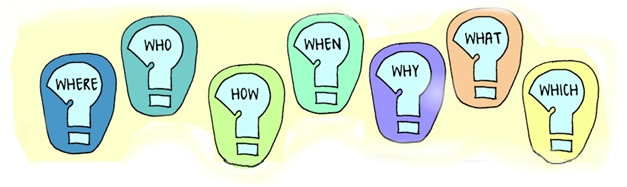 Don't be afraid to ask questions wherever you go, with whomever you meet. Some adults think being curious is “being nosey”. When someone is being nosey, they want to know something for their benefit. When someone is being curious, they want to better understand a person or situation. Phrase your questions accordingly.
Learn to ask better questions. The skill of curiosity and questioning go together. To develop the skill of curiosity, we have to question why things are the way they are or why a person may do something a certain way.
Do not shy away from the unknown. If someone is not doing what we expect, be curious about what their outcome could be. You learn to see things from another perspective. It can be a learning opportunity for both of you.
Embark on a curious excursion. You don’t have to go far. It is best if you go someplace new. You could choose a museum if that interests you, but you can bolster curiosity exploring a hardware store or tree nursery. The next time you go to supermarket, ask the produce manager the differences in the variety of tomatoes, apples or onions. When someone cannot answer a question, make note of it and explore the answer via a new route, such as a library.
Fall in love with learning from new situations, experiences, and people. Go out into the real world because an office or classroom can pose limitations. You can learn from books, courses, podcasts, seminars and training programs for sure, but do not restrict yourself to just taking information someone else presents. You can observe what others have done, but you learn more by experiencing it. Learn from direct interaction with the real world. Go out in nature and let your curiosity run wild.
Learn something new that excites you. We all have random interests that we never act on. Pick one and pursue it. You can start with Wikipedia or TedTalks to discover stories, thinking, and expertise from knowledgeable people, specialists, speakers or writers who have become influencers on any topic. Once you get your curiosity juices flowing, there are dozens of free online educational opportunities through: HarvardX, Coursera, the Internet Archive to name a few.