Your brain benefits from physical activity or body fitness exercises just as other organs, muscles and bones do. Studies show that exercise increases your ability to learn, handle stressful situations, make clear decisions and recall facts and memories. Scientists see a connection between the amount of exercise a person does and increased brain activity. What really distinguishes low, moderate or high intensity exercises from each other is their effect on heart rate and the overall effort required in performance of the exercise.

Your brain needs adequate periods of rest and sleep. Though your brain never actually goes to sleep it must have adequate time to do its work properly while your physical body relaxes, sleeps and rejuvenates. During sleep your mind remains active. Sleep is the only time that your brain can organize everything that has been learned and experienced during your waking hours. Sleep is the only time in which the brain is able to wash away the build-up of the toxic by-products of cell metabolism, the waste protein that has accumulated over the day and can build up and cause dementia. If you have no sleep or insufficient sleep, the critical physiological processes, including those of the brain, are not able to do their work efficiently.
When sleep pressure and circadian rhythm reinforce each other, the result is healthy sleep which helps maintain a healthy mind and body. If you have difficulty sleeping make sure you check with your doctor to determine if you have a sleep disorder that can be treated. People usually are not aware of their breathing and movements while sleeping and do not think to talk to their doctors about issues that might be related to sleep.
Learn More about Healthy Sleep
Your brain gets its nourishment through hydration, oxygen and a nutrient rich and balanced diet:
Hydration
Over 70 percent of your body is composed of water. Every function in your body is dependent on water, including the activities of the brain and nervous system. Therefore, you should stay hydrated with water.
Oxygenation
Your brain has a lot of structure and it needs to be fed. Specifically it needs oxygen which is vital to brain health, function, growth, and healing. Your brain cells are very sensitive to decreases in oxygen levels and do not survive or function well or for very long without balanced oxygenation. In fact your brain uses about three times as much oxygen as the muscles in your body do. How well your blood cells are saturated with oxygen is as vital to your health as other vital signs: body temperature, heart rate, breathing rate, or blood pressure.

Explore Breathing with Intention for Health
Blood Circulation
You need to do everything you can to get the best blood circulation because your blood carries oxygen and other nutrients to your brain. Moving your body promotes blood flow through the brain, and that blood flow supplies nerve cells with more oxygen and nutrients.
Balanced Diet of Healthy Food

There is no substitute for good nutrition to keep your brain healthy. Although your brain makes up only about 2% of total human body weight, it requires 20-30% of your body's energy or daily calorie intake to function properly. That is more energy than any of your organs. Your brain need this energy required to perform the most basic functions even in one very lazy day of no activity. The bulk of your brain's energy supply is used to keep your memory, mobility, and senses functioning normally. A third of the energy is used for maintaining your cell-health.
Energy comes from food, so your food choices do matter. You should avoid foods that restrict blood flow to the brain. The timing, type, combination, and consistency of foods can influence energy levels.
Who can deny that rest and relaxation are rejuvenating? Throughout history people have intuited that puritanical devotion to perpetual busyness does not, in fact, translate to greater productivity and is not particularly healthy. Research on the subject reveals that mental breaks and idleness are vital to the brain for it to remain sharp, replenish attention, solidify memories, encourage creativity, and generate its most innovative ideas? There is no better way than both rest and relaxation to calm your mind. When you let your muscles and organs recover and recharge you reduce stress or anxiety, improve mood and cognitive functioning, boost immunity, and improve your ability to cope with adversity – all of which lead toward a better night’s sleep and better brain function.
Yes there is. Rest and relaxation work hand in hand to remove the tightness from your body and the stress from your mind, but there is a difference:
When it come to having a restful breather, you do not need to lie down. You can break from the hectic pace and pressure of daily life by simply closing your eyes and quieting your thoughts to give your neurons a break from the busyness of doing, thinking, or being engaged in activity. Rest gives you energy.
There may be days when you can make time to stroll in the park, get away to a quiet corner to eat lunch alone or read, but when time seems at a premium you can still engage in a state of calm by adding some of these one-minute or five-minute calming techniques to your daily routine:
Take One:
Take Five:
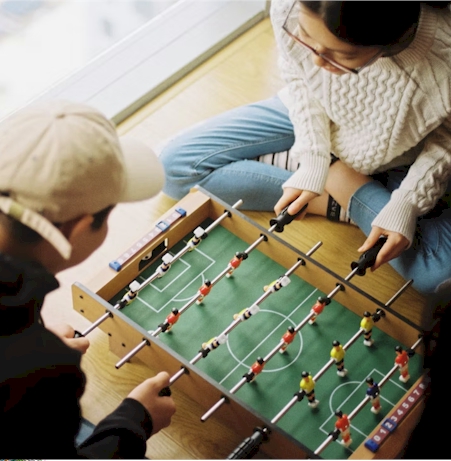
Be it a spirited time with friends or a quiet game, when you take time to relax it is rejuvenating. Any bout of relaxation reduces stress or anxiety, improves mood and cognitive functioning, boosts your immunity and improves your ability to cope with adversity. Even a five-minute relaxation break at various times throughout the day leads you toward a better night’s sleep. Make down-time a priority by introducing relaxation strategies into your daily routine.
Investing in both rest and relaxation will prepare you for a more restful sleep. This is particularly important when you are having a stressful day both mentally and physically.
Your brain takes a heavy hit from chronic stress, persistent overwork, a hectic and energy-draining lifestyle, and anything that lessens your attention span or makes you feel frazzled and dull-witted. You should be attentive to how much stress is caused from hurrying or working too hard.
It turns out that being sociable is just as important as your diet, exercise, and other lifestyle factors. More complex human interaction challenges your brain and increases cognitive function. When you connect and socialize with different people you boost your emotional intelligence.

In addition to a healthy lifestyle, your brain works more efficiently when it is properly exercised or stimulated through activities or mind exercises. Brain imaging on humans shows immediate changes in blood flow whenever the brain is stimulated. Every region of your brain lights up with the simplest of tasks. If you think of intelligence as a quality that can develop and expand then it follows that to enhance the capability of your brain you must stimulate and challenge it. Just as proficiency at playing the piano wouldn't improve if you practiced with only one finger, brain health and brain power will not advance from only one or two types of brain exercise.
The goal is to target specific areas in your brain with a variety of exercises, but at the same time the stimulation exercises should be diverse and challenging to exercise all areas of your brain. Challenge comes from exercising your brain in unexpected ways through curiosity, continuous learning, exploring the unfamiliar, engaging all the senses and different parts of your body in new experiences or pushing yourself to the next level.
The exercises suggested in this guide are a teaser in comparison to the variety of exciting and challenging ways to incorporate brain exercises into your daily life. Let our suggestions guide you to seek out different challenges, or create your own as you learn more about your mental strengths. Think about adding another dimension to any exercise in this guide by doing it with other people, using a blindfold when safe to do so, or using combinations of challenges.
Brain stimulation exercises should not be considered a substitute for a healthy lifestyle, which includes making sensible choices for eating and exercising regularly. Activities that numb the brain like smoking, taking drugs and the excess consumption of alcohol should be avoided. Other risk factors are blood pressure, diabetes, cholesterol, or prolonged period of sleep deprivation.