A keen understanding of how you
use and interpret body language helps you to cultivate trusting relationships
and communicate more effectively. This
is important in a workplace where people are all different and the dynamics are
always changing.
Some forms of positive body
language are conscious like standing up straight, smiling and offering to shake
hands. Given this awareness of what
constitutes good body language, people can still portray overt non-verbal
communication cues that are less than positive, even when they can consciously
control them.
To others in the workplace,
negative body language is obvious and quick to spot. Unfortunately many people are simply not
aware that negative behaviours can offend and alienate people. In the workplace, we need the cooperation of
others, so we should seek to become more considerate and adaptable when using
body language. People who exhibit
undesirable body language in the workplace, should consider putting in an extra
effort to fix these missteps and keep them in check
From a recent survey, thirty seasoned entrepreneurs and more than four hundred of their employees and managers shared what non-verbal communication signals they deemed the most difficult to deal with in the workplace. These were things they experienced on a daily basis. Their responses included descriptive words to describe the effect of these signals: tactless, awkward, improper, damaging, impolite, lack of respect. We narrowed the list to the ten that most frequently mentioned. We present them in no particular order. However, number 10 “Looking Like a Liar” actually encompasses four critical body language cues and deserves particular attention.
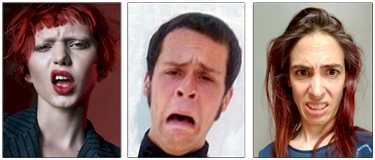
This complaint comes as no surprise. Most of us do not realize that we furrow our brows and scrunch-up our faces in reaction to things. We do it a lot. This type of body language copy-cats overt exaggerated behaviours that were contrived for Hollywood cameras. In workplace conversations, however, this kind of reaction comes across as intimidating and hostile; it puts people on the defensive, and then they are less likely to speak openly.
You may not realize that you are displaying such overt cues. Examine some of your more recent experiences, especially those when you felt overwhelmed or displeased. Are you aware of those moments when your displeasure was evident in your facial experession? Pay attention to your reactions and keep overt facial responses in check.
When people are speaking they like eye contact. A nod or smile indicate the listener is paying attention. It is a form of respect.
When you are in a conversation, make sure others know that you are listening. You do not have to agree with someone to show them basic respect.
Respondents cited overacting as a common drawback to communication and difficult to deal with in the workplace. Exaggerated gestures can imply that the person is stretching the truth. Exaggerated nodding, for example, sends a signal that one is experiencing anxiety about approval.
Two types of overacting were cited:
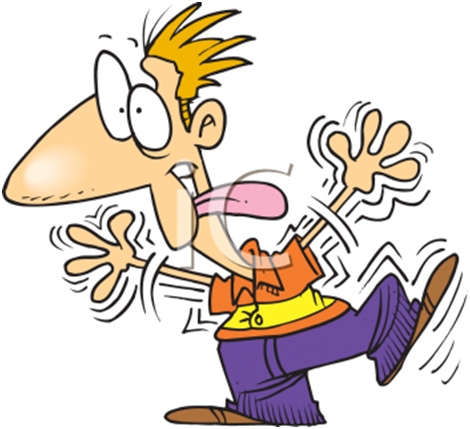
A. Expansive gestures: None of us wants to speak to a statue. Neither do we want to deal with a person who constantly over-emphasizes or over-acts body language in order to add emphasis to words or get attention. This includes how we move our arms wildly or too frequently, or how we lean or manipulate our torso into action, or employ our hands. Some expansive gestures may help you express your thoughts more effectively. In fact gestures in moderation can indicate passion, either positive or negative. However, exaggerated movements may not match the words or other non-verbal cues. Inconsistency in body language can send a false message. For example, people tend to perceive heavy nods as an attempt to show the individual agrees with or understand something that they actually do not understand.
Do not imitate sitcom actors who exaggerate movements for the benefit of a camera. Use expansive gestures sparingly and only when it serves a purpose. Try to catch yourself in the act of putting on a show with your body language. Then block yourself from making these false signals.
B. Overplaying a role: Social beings that we are we tend to like to be around friendly happy people. However, our respondents stated that some coworkers overacted the role of being friendly or overjoyed at absolutely everything. They affect repetitive gestures, which they apply in several situations, some of which were blatantly unnatural.
If you try too hard to apply the same gestures, such as looking joyful or friendly all the time you will appear pompous, phony, or one-dimensional. Often the natural body language contradicts the friendly gestures, anyway.
This example stands out: Every morning David came into the office smiling. To each individual, he raised his hand in a wave, greeted them with a warm hello, followed by a friendly-sounding, “How are you?” Yet, David never established good eye contact, because he continued to walk as he uttered the last couple words of his greeting. He never paused to get a response. His words, smile, and wave started out friendly enough, but David strode off with a smile still pasted on his face, indicating no genuine interest in the people or their response.
Expressing a repetitive or overplayed attentive attitude all the time can cause others to dismiss it easily as shallow.
If you think you have perfected an approach or attitude that makes an impression, maybe you should rethink what you are doing. Your coworkers may not be impressed at all.
We have all been in a conversation with someone who spent a lot of time looking around the room. They act like they are scouting the area to see who they can talk to next or catch someone else’s eye – basically they appear to be looking for something better to do.
Do not be that person. Make sure that your head and torso are facing the speaker. Do not watch others to see what they are doing or how they are reacting. Treat everyone you talk to with respect. Listen with respect.
Phones are everywhere. But, are they necessary everywhere? Managers and colleagues listed “checking their phone every few moments” as rude body language. On the job, people are paid to concentrate on the task at hand. At business events or meetings, employers expect their people to engage with clients. Neither co-workers or clients are impressed when people stare at their phone in anticipation of an alert.
g at your phone is akin to watching the clock while talking to someone. It is a clear sign of disrespect, impatience, and inflated ego. It sends the message that you have better things to do than talk to the person you are with and that you are anxious to leave them. Put your phone away to minimize distractions. If you cannot hide your phone, do not stare at it. If it is important to your job, check it at appropriate intervals. If not, ignore it during working hours.
When people are nervous or stressed out, their body sends out a signal to do something, anything. So, they fidget or pick at things. They might play with their clothes, hair, jewelry, phones; pick at their nails or portfolios; clench and unclench their hands; or shift their weight from foot to foot. This constant fidgeting sends out poor vibes to everyone who is trying to listen or concentrate. When someone is speaking, this body language draws attention away from whatever is being said.
When you catch yourself fidgeting or picking at things, refocus your energy by folding your hands in your lap and taking some deep and conscious breaths to relax. Picture something that is pleasing to counter the stress.
A slumped posture shows a lack of energy and confidence. Slouching is also a sign of disrespect. It communicates that the person is bored and has no desire to be where they are. Employers would like their customers to see a certain amount of get-up-and-go or passion in the people that represent the company. Employers would like to know their employees are engaged in whatever they are doing. Maintaining good posture commands respect and promotes engagement from both ends of the conversation.
You would never tell your boss or a client, “I don’t understand why I have to listen to you,” but if you slouch, you don’t have to say anything because your body language speaks loudly and clearly, saying just that.
Scowls turn people away, because they feel judged. People who do not smile enough seem less friendly, less cheery. It is not natural for everybody to smile without a real reason. But, did you know that smiling has been proven to make us feel happier and has power to make others feel-good? MRI studies have shown that the human brain responds favorably to a person who is smiling, and this leaves a lasting positive impression.
Scowling or having a generally unhappy expression sends a message that you are upset by those around you, even if they have nothing to do with your mood. Make a habit of greeting someone with a genuine warm smile (not faked, because the other person will know). Smiling suggests that you’re open, trustworthy, confident, and friendly. The more you are able to smile, the more composed you will feel and you will undoubtedly be more pleasant to work with.
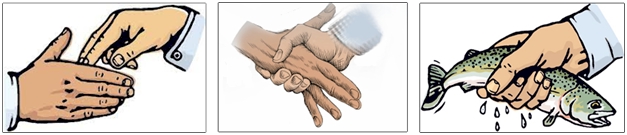
Handshakes are often the first impression someone has of you. For men or women, a weak handshake signals being unprofessional, inexperienced, uncertain, or lacking commitment. Too much force can be a bone-crusher that comes across as aggressive. A two-handed shake can be interpreted as untrustworthy in a business meeting. Hand pumping makes other uncomfortable. Finger handshakes are taboo.
Learn what a good handshake should be. Your customers will appreciate it. Note that in certain cultures a weak handshake is a sign of respect and a firm handshake is aggressive.
We tend to be watchful for deceitful behaviors in others. In less than a tenth of a second, we take in several signals that we process instinctively. We can sense when someone is lying before we can logically decode specific signals in our brains.
In a constant struggle to get ahead, please people, or appear like super-beings a person can send off non-verbal cues that are similar to those displayed by liars. A first impression like that is difficult to erase. It makes it difficult for that person to have influence over others if any of these four behaviours send the wrong message.
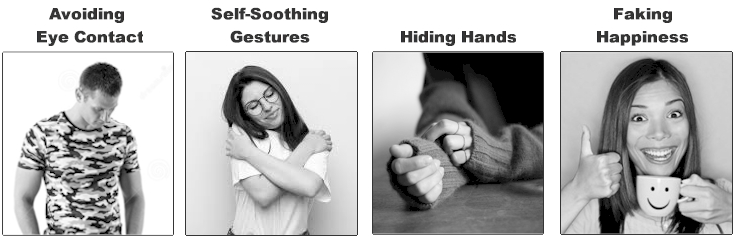
A. Avoiding Eye Contact: Avoiding eye contact makes others feel ill at ease or ostracized. We all know someone who tends to talk to the floor. Inability to make eye contact can mean a person is lying. It can also mean that a person is unprepared and feeling uncomfortable. For our respondents, avoiding eye contact makes it look like the person has something to hide and that arouses suspicion.
Lack of eye contact can also indicate a lack of confidence and interest, which you never want to communicate in a business setting. In conversation, keep your eyes on the level of the other person's face. This is respectful eye contact. When you break eye contact, as you should every few seconds, try looking slightly off to the side, without head movement. Avoid scanning the room.
B. Self-soothing gestures: Our anxiety manifests itself in how we touch our face or rub the skin of our arms and hands. Both can be soothing behaviors when we feel ill at ease. We all engage in “self-soothing” gestures that are evocative of when we were babies and needed mom or dad to gently rub our backs or massage our little fingers to calm us. They send signals of low or-esteem, doubt or deceit.
As an adult, you may have advanced biting your nails or cracking your knuckles to lower your anxiety. Still, you may use self-soothing gestures to seek comfort: playing with your hair, rubbing the backs of your arms, biting the inside of your cheeks, or rubbing the tops of your thighs. Before you make an entrance into any event or conversation that might make you feel nervous or uncomfortable, calm or self-soothe yourself in private by listening to your favourite song or rubbing the back of your neck and arms.
C. Hiding Your Hands: We have dedicated regions in our brains that allow us to instantly recognize where a person’s hands are in relation to their body. Because people are nervous or uncomfortable they do things with their hands that make them appear like they are searching for distractions and have something to hide. It only takes 3-5 seconds for an observer to process that type of behavior and think an individual is acting dishonestly.
If you hide your hands in your pockets or under a table, the observer is unable to gauge your intention. If you suddenly realize that you have no idea what to do with your hands, the best choice is keep your hands visible and relaxed and expressive of your engagement. Sit with your hands visible, but still. Avoid making a fist, tapping your fingers on a surface, doodling or playing with an object. If you are standing do so with your hands hanging loosely by your sides. It is a good neutral position. Standing this way may feel weird or forced at first, especially if you are a naturally restless person, but it will probably feel easier and more natural with practice. Try practicing in front of a mirror.
D. Faking happiness: We often pretend to happy. We try to hide our negative emotions like fear, jealousy, or sadness by feigning that we are cheerful or delighted. We cannot tell our coworker that we are envious of that promotion she received or our neighbor that we are offended we did not get an invite to their daughter’s wedding. Instead we paste a smile on our faces and fake happiness. What we rarely realize – and we should make it a priority to take seriously – is that real happiness and fake happiness look different on our faces. Genuine happiness engages the face in an undeniably distinct way – the cheeks, wrinkles, jaw line, side eye muscles, wrinkles, brightness of the eyes, even the crow’s feet look different. If you fake happiness, the other person knows nearly 100% of the time how you really feel.
Honor your authentic emotions and do not hide behind fake happiness. If you are not happy about something, it is much better to let the other person know. You do not have to be rude or hurtful; just take an honest engaging approach, using careful language. Let’s go back to the example of the promotion to illustrate this point. You might say, “I’m disappointed I didn’t meet the criteria, but I’m pleased it went to someone I know and respect.”