Generating ideas is the exhilarating part of the innovation process. However, an innovative idea serves no purpose to your organization unless it is tested and implemented. Ideas that come to fruition make headlines. Few innovations put a spotlight on the incremental phases of development, the long days and frustrating months of planning and problem solving that preceded their achievement.
It took Newton twenty years and Darwin seventeen years to clarify and publish their ideas. The post-it note took almost a decade and a change in leadership at 3M before it gained any momentum. No one wins a Nobel Prize for a brief stint in science. Look at Facebook. It was three years after launch of the first version before the general public was even allowed to sign up, and several more years before the company generated meaningful revenue.
We hear distressing stories of would-be innovators who had a novel idea, expected an instant money-maker, and gave up too easily. They had great ideas that were ahead of its time or just not right for the particular market they targeted. They interpreted their attempt as a failure when in fact their ideas could have been the catalysts of new and better ideas. Of course, one could say they had unrealistic expections of overnight success. The bottom line is they did not understand that all innovation has life cycle and that it requires trial and error, analysis and adjustment, along with skills, perspiration and tenacity to guide good ideas through from one phase to the next.

Whether you are starting from scratch to bring a new product or service to market or reinvigorating your business, it is through the innovation process that you turn an idea into a reality and guide your business through the competitive landscape. Innovation has a life cycle that can be segmented in five broad categories:
1. Idea Generation/Discovery
Maybe you woke up one morning and an inspiring idea for a business. Possibly someone is handing you an opportunity on a silver platter or your team made a breakthrouogh during a brainstorming session. Perhaps you have learned more about customer preferences through feedback. Could several ideas be percolating in your mind? Any one of these scenarios places you in phase one of innovation.
2. Concept Screening
You do not follow through on implementing an idea because it sounds like a money-maker. You need to think through the idea, conduct focused research to ensure you’re solving the right problem, measure the pros and cons of your idea, experiment with it, and make a choice that you can justify with the hard facts. When you innovate a product or service, you must allow time to dig deep into the right questions that do not always have easy or obvious answers. If you have more than one idea your research and data should help you determine if they can be amalgamated into one big idea or if a few are not worth implementing. Through the screening process you decide what idea you will bring to fruition. Innovation experts recommended you spend more time quantifying the benefits of each idea before you even plan think about plans for development.

3. Implementation/Development
In this third phase you transform your ideas into actual products or services. Even though you know what product or service you want to bring to market, implementation is complex and challenging. Innovation always requires you to learn at least something new, but more often than not, it requires gaining both new knowledge as well as new capabilities. If you are creating a new product there are strategies involving investment, design, building a prototype, testing, making improvements.
In the development phase do you know how many different skills or abilities you need to employ to transform your idea into a something ready to bring to market? Do you realize the time or patience you will need to advance from one step to the the next in the implementation phase. Each step has to be streamlined for efficiency and effectiveness to ensure a winning launch.
You have to have patience as you steer innovation through these phases of implementation and at the same time stay tuned in to what is happening in the world around you so you do not miss new insights. Keep in mind that the innovation cycle differs between the private and public sector, which often has different approval processes. The complexity is compounded in a regulated industry. It can also differ between businesses operating on a global scale versus local.
When you work alone it can be especially difficult and time consuming to devise a business plan, determine your processes, develop relationships, and be tuned in to follow through on every aspect of research and development and deployment. The more complex a product gets, the more complex and expensive the implementation process gets. You have to have realistic expectations and plan accordingly.
Rushing the process does little good. It is better to let each phase of implementation flow into the next. In that time keep pushing for feedback and validation because that is what inspires the next phase of implementation and makes for a trouble-free transition.
4. Commercialization/Launch
Once you determine you are ready to bring your innovation to market you need to generate awareness for your product, utilizing marketing and promotion strategies to communicate value, as well as sales initiatives. The commercialization process is broken into phases of its own—from the initial introduction of a product or service to evaluating consumer response and acceptance. During that time you have even more time and patience:
Technically, marketing marks the end of the innovation lifecycle. But, there are always opportunities for incremental innovations, conceptualizing new applications, breakthroughs or re-growth.
5. Applying Business Improvement
In reality, the length of an innovation's time frame can vary from months to years or even decades, depending on the type or scope of the innovation. It could largely depend on how well or fast the innovation is implemented, and what is happening in the world during that time. It might depend on how much value the innovation really has, or how that value might have changed since the idea was conceived.
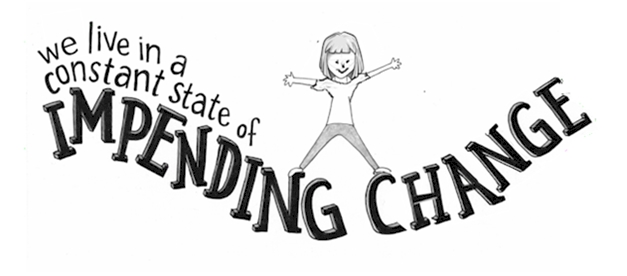
You should never stop innovating because even if you got to market quickly you need to think about how you will increase awareness and continue to create customer loyalty. With the investment of time, energy and resources that establish a successful business there is risk in being complacent or having tunnel vision. You do not want to be ill-prepared to innovate or adapt to change. You do not want to be one of those companies that created a fantastic product and then just vanished from the market.
Looks at big organizations that lost touch with the people they served. Sears felt indestructible before Wal-Mart’s aggressive innovation took root. Sears was ill prepared to innovate or adapt to change. Now Walmart is under assault from Amazon.
If you are starting a new business or doing something new the investment of time seems daunting and risky. However, in today’s environment there is also great risk in not improving or innovating, because it is just a matter of time before the competition does better.
As a small business owner
you should assess whether you are sourcing enough good ideas from outside your
immediate think group. The more ideas generated, the greater the chance of
finding innovative ways to combine them into something new.
Inspiration can strike when you least expect it, but that is rather an inefficient way to drive innovation and creativity. Want a do-it-yourself approach to decision-making and problem solving? Try one of these brainstorming techniques to develop your ideas.
Professionalism is what you do visibly that impresses and inspires others and what you do behind the scenes – integrity, self-regulation, conscientiousness – that allows you to fulfill your role to the best of your ability and gives you a sense of satisfaction and self-worth.
When you are overworked and under pressure, try these two super easy-to-implement strategies to fend off procrastination. They can be completed quickly and more importantly they work best to set the tone for an excellent day.
Kindness should extend to our colleagues and work family. In the workplace, kindness is a catalyst that helps to build trust, drives morale, improves well-being, engagement, and productivity. Kindness makes you feel good and that is a good way to spend your day.
As a professional, you want to get the job done – and done well. You do what is necessary to produce results that exceed expectations. You recognize whatever you do to keep advancing personally and professionally also helps your business to thrive.